Middleborough was once known for a Thanksgiving day meal staple other than the cranberry. In 1876 the Plymouth Old Colony Memorial reported that
"the best turkeys in the county market this year were raised about Middleboro."
Source: Old Colony Memorial, "County and Elsewhere", November 30, 1876, page 4.
At Christmas, 1909, P. H. Peirce Co. which operated a grocery store in what is now the Middleborough Police Station on North Main Street, sent Christmas greetings (courtesy of Wood's Coffee) to local residents by means of this decorative postal card.
In turn, I now send it to the readers of Recollecting Nemasket, wishing youa Merry Christmas and may you have a happy, healthy new year.
Religious concerts and pageants have been a central part of local Christmas observances since the mid-nineteenth century. One of the most largely attended of these was a concert held on December 23, 1877, at the Central Methodist Church on School Street.
On Sunday evening, Dec. 23, a Sunday School Concert was held in the Centre M. E. Church. The principal feature of the evening consisted of an allegorical representation of the Star in the East, or the birth of Christ. Over eight hundred persons were present at the close of the exercises, and many left before the close, and, a large number were unable to gain admission to the audience room. It was, as are all the concerts gotten up by the Superintendent of the school, Mr. F. M. Sherman, a grand success.
Indeed, "success" was a bit of an understatement. Given that the population of Middleborough was probably just over 5,000 at the time, the concert was remarkably well attended, by both Methodists and non-Methodists alike.
Source: Old Colony Memorial, “Middleboro’”, January 3, 1878, page 4.
A century ago, the harvesting of live greens for Christmas was a lucrative business and one which brought numerous outside entrepreneurs to Lakeville in search of evergreens, holly and laurel. Greens were taken from the woods of Lakeville in large quantities, frequently by the wagon load, and brought to Boston where they were processed for sale. The automobile increased access to rural Lakeville and Middleborough so much so that ultimately greens were removed in such quantities as to raise concerns about over-stripping the woods, as well as the taking of greens from private property, the latter issue prompting the attention of local police by 1930.
“The evergreen harvest here has begun," noted one account from Lakeville dated December, 1904, "and many representatives of decorating houses are now cleaning the holly, evergreen, princess pine and laurel from the woods. Mountain laurel, which is found in quantities in this town, and in Acushnet and Freetown, is shipped to Boston, where it is made into wreaths and streamers for decorating purposes. There the streamers sell for about 6 cents per yard, allowing a good margin for the makers. Some have arrived with tents, and will remain for several weeks, gathering the material. The shipment of trees is light, as there are but few good cedar trees suitable for Christmas, and these are carefully guarded.”
A heavy snowstorm on the evening of December 17 which dumped a foot of snow in the region brought the 1904 harvest to a halt. “The evergreen harvest here has been stopped by the heavy snows, and no more will be gathered before Christmas unless a big thaw comes. For the past few weeks the woods have been well scoured in search of green stuff, and a great quantity of it has been gathered and shipped to the Boston market. A quantity of holly and mountain-laurel has been cut and shipped from here.”
Each year larger and larger quantities of greens were removed from Lakeville, leading to concerns of over-stripping the woods. “The collection of greenery, holly and laurel for Christmas is underway here. As has been the custom with collectors of this holiday decoration they have invaded Lakeville, and are carrying off the stuff in team loads,” recorded the Middleboro Gazette in December, 1908. One new innovation which contributed to this process was the automobile. Where city residents had previously been dependent upon intermediaries to acquire their Christmas greens, the automobile permitted city dwellers to enjoy a day-trip to the country where they would pick pines, holly and other specimens with which to decorate their homes. “The greenery business in the section for Christmas was the heaviest [in 1912] for years. There were large numbers engaged in the pursuit, and one man alone marketed 400 wreaths. The advent of the automobile, cruising through the country, caused a large amount of greenery, especially holly, to be carried away by the drivers to their homes.”
The annual search for Christmas greens in Lakeville and surrounding communities continued throughout the first decades of the twentieth century and appears to have contributed to the decline of a number of species locally, most notably American holly (Ilex opaca) which was formerly abundant in local woods. In 1929, the scarcity of holly inlocal woods was lamented and attributed at the time to a "severe and protracted drought" in the summer and fall of that year. What holly could be found was quickly taken by gatherers of Christmas green, irreparably damaging trees and furthering the ecological decline of the plant locally.
By 1930, many local property owners had had enough, and began reporting the removal of greens to the local police as indicated by the following news report from December, 1930:
There have been several complaints received by the police from land owners in various parts of the town that their woods are being entered and stripped of holly and other evergreens without authority and in some cases holly trees have been stripped to such an extent that they will die. One man reports that automobiles have come to his place Sundays and leave full of small spruce or pine branches while others come and get small cedar trees. Arthur Winslow and Edwin C. Bennett of Marion road are among those who have reported to the police. Chief Sisson is checking up on this trespassing and prosecutions are likely to follow.
Middleboro Gazette editor and owner Lorenzo Wood commented upon the situation in late December. Clearly unapproving of the unauthorized removal, Wood was at a loss to provide a solution, as the geographic expanse of Middleborough (as well as Lakeville) did not easily lend themselves to prevantative patrols by local law enforcement.
During the winter of 1933, Susan B. (Merrihew) Brackett of
Rock Village was advertising winter greens for sale culled
from local woods. Among the greens offered was holly
which at the time was still present in local woods though
increasingly difficult to locate.
From the number of complaints received by the police this holiday season of the reckless slashing and taking away of Christmas greens from the woods in this section without permission from the owners makes one wonder what kind of complex these people are laboring under and where the principles of the rights of others comes into the picture. Holly trees, which in a great way are becoming extinct in many localities, have been hacked and stripped of their branches leaving them to die, trailing evergreens have been pulled up by the yards and small cedar and hemlock trees have been carted away by the hundreds, all without the slightest regard to the owners of the land or tees thereon. In some of these instances, the trespassers have probably cut a tree for their own use, but in most cases it has been a commercial proposition and the trees no doubt have found their way into the markets of the nearby cities. One of the rankest cases of this utter disregard for others' property came to the attention of the police this week when a local farmer complained that a fine blue ornamental spruce of nine years growth which stood near the roadside had been cut down and taken away. Last summer the owner refused $25 for this fine tree and now probably with a few days use as a holiday ornament it is of no use to anybody, and to think that a tree that would serve the purpose just as well could be bought from regular Christmas tree dealers for 50 cents. It all fits into the jig-saw puzzle of conditions of today when apparently there is disregard for law on all sides. In the case of these tree thefts, what can be done about it? Nothing much except when one happens to catch the intruder and hail him into court. To watch for these depredations would take a police force as large as a regiment.
Illustration: "Budding Pinecones", photograph by Caro Willis, November 23, 2008, used under a Creative Commons license
Sources:
Unidentified newspaper clippings, James H. Creedon Collection, Middleborough Public Library, “Evergreen Harvest at Lakeville”, December 5, 1904 and “Lakeville”, December 20, 1904
Middleboro Gazette, “Lakeville”, December 18, 1908, page 2; “Middleboro”, December 27, 1912, page 5; "Woods Stripped of Evergreens", December 12, 1930, page 2; "The Spectator", December 26, 1930, p. 1.
Originally located on Center Street near the Four Corners and operated by James Kanakis, the Central Cafe was later run by the Dascoulias family, relocating to its present home near Oak Street in 1940. While the Central Cafe has long been known for its pizza, it has also featured (and continues to do so) a variety of menu offerings. Among the most festive was certainly its 1927 Christmas day dinner which included a traditional plum pudding as advertised in the pages of the Middleboro Gazette.
Source: Middleboro Gazette, December 23, 1927, page 6.
Illustration: "Middleboro's Glorious Fourth", advertising postcard, 1910 This postal card helped advertise events which were included as part of Middleborough's celebration of Independence Day a hundred years ago. Included among them was a parade of "Antiques & Horribles", a tradition common to many communities in New England and beyond in which costumed participants dressed as horrifying or ridiculous characters. Notice the tower of Middleborough Town Hall just above the patriot's tri-corner hat.
Illustration: "Best Easter Wishes", greeting card, Louise Bradford Pratt, pencil and ink, 1909. Louise B. Pratt (1887-1987), sister of Ernest S. Pratt, was a longtime librarian at the Middleborough Public Library who had an interest in drawing in pen and ink. She sent this hand-made greeting card depicting the Easter bunny toting a brightly-colored floral hat box and a border of pussy willow, to Mrs. Warren Lovell of Rock Street, Middleborough in April, 1909. Miss Pratt was the last family member to live on the Pratt Farm.
Dedicated to all those Irish-born immigrants to Middleborough and Lakeville, whose journey made ours so much easier, and whose tales have yet to be fully told.
Is maith an scéalaí an aimsir. Time is a great storyteller.
In March, 1908, a local schoolteacher created a brief furor within the local Irish community when she forbade the wearing of green ribbons by Irish-American children in her classroom on St. Patrick's Day.
Green Ribbons Ordered Off Incident in Schools at Middleboro Parents of Pupils Will Have the Matter Investigated Miss Wentworth Says It was Only for Discipline
The request of Miss Ethel A. Wentworth, a teacher in the sixth grade School-st school, that the pupils there remove their green ribbons yesterday has incensed the parents of the children who are of Irish descent, and they declare that they will have the matter investigated, as they believe that their children have a right to wear green ribbons on St. Patrick's day. The incident has created much discussion among the residents.
School started at 9 as usual, and as soon as the pupils were seated, it was observed that several wore green ribbons. Some wore modest bows, while some of the boys wore larger ones, which showed up conspicuously.
Miss Wentworth requested that the children remove the green ribbons and some did so. Others demurred, among them being Walter O'Hara, Ralph McQuade and Miss Mary Baker. O'Hara, however, put his ribbon under his coat lapel. McQuade refused at first to remove his long ribbon, but finally took the bow from his coat. Miss Baker declined to remove her ribbon, on first call, stating that her mother had attached it to her dress and that she intended to wear it. After discussion it was removed, but in the afternoon Miss Baker returned to school wearing the ribbon, and told Miss Wentworth that it was put on by her mother and that she was going to keep it on. She wore it during the rest of the school session.
Miss Wentworth was seen at her boarding place at 23 North st today, and admitted that she had requested all the pupils who were wearing green ribbons to take them off.
When asked why this request was made, she said it was because the green ribbons attracted the attention of the other pupils, and diverted their minds from their lessons. To preserve school discipline she thought that the ribbons should not be worn, and accordingly ordered them removed. She further stated that where she had gone to school, the wearing of the green ribbons on St. Patrick's day was not allowed, presumably because they would detract attention from studies, so she was going to run her school along those lines.
When asked if there was any other reason, or if nationality figured in her request that the green ribbons be removed, she declared that it did not enter into it at all, the reason being given above.
The parents of the children who had to remove their green ribbon, purpose that the matter be taken further. Already the attention of Supt. of Schools C. H. Bates has been called to it. He admits that there would be no objection for the children of Irish descent to show their patriotism in that manner, if they saw fit, and, in the past, he stated that such an objection had not before arisen in his school experience.
Parents say that there was no chance to see whether the school work was disturbed by the green decorations, as Miss Wentworth asked for their removal just as soon as the pupils were seated according to the stories related by the school children. They are inclined to doubt, though, if the wearing of the ribbon in honor of the memory of St. Patrick would disturb the school any more than some girl wearing a hair ribbon or a boy with a pair of new boots. They generally criticise the action taken by Miss Wentworth as entirely unwarranted and very indiscreet, especially in a place where there are so many children of Irish descent.
Among the pupils who wore the green ribbons were Everett Boucher, Ralph McQuade, Walter O'Hara, Helen Pasztor, Viola Babb, Stella Plunkett and May Baker.
A few years ago a teacher here wore a flaring yellow tie on St. Patrick's day, while children of Irish descent wore their green ribbons, but up to now no teacher in recent years has been known to request the removal of green ribbons. In many of the other schools here yesterday the pupils wore green, and no comment was offered by the instructor.
Miss Wentworth formerly lived in Cambridge. She is a graduate of Bridgewater normal school. She taught at Rochester, N. H. where her parents now live, prior to being elected a teacher in the public schools here, commencing her duites last September.
In her defense and as she herself insisted, it is unlikely that Miss Wentworth was motivated by thoughts of the children's ethnicity. Previously, children in the Middleborough schools had been permitted to wear small tokens such as colored ribbons, and little thought was given to them as national expressions. The overt anti-Irish sentiment which had been present in the community in the previous half century had largely dissipated (though more recently arrived immigrant groups, particularly the Italians, were subjected at the time to the worst ethnic stereotyping and prejudice). Miss Wentworth's principal failing, however, appears to have been her utter lack of understanding, both for the feelings of the Irish-American children or how deeply rooted was the connection between the local Irish and the green ribbons they wore.
The ban resonated deeply within the local Irish community for whom the "wearin' o' the green" was a symbolic connection with their home country. The practice of wearing green clothing, green ribbons and green shamrocks was one which had once been banned under the English administration in Ireland following the Rising of 1798, and for local Irish-Americans to hear once more that they (or at least their children) were forbidden to wear green, struck a chord within their collective historical consciousness.
O Paddy dear, and did ye hear the news that's going 'round? The shamrock is by law forbid to grow on Irish ground! No more Saint Patrick's Day we'll keep, his color can't be seen For there's a cruel law against the Wearin' o' the Green.
I met with Napper Tandy, and he took me by the hand, And he said, "How's poor old Ireland, and how does she stand?" "She's the most distressful country that ever yet was seen, For they're hanging men and women there for Wearin' o' the Green.
So if the color we must wear be England's cruel red Let it remind us of the blood that Irishmen have shed; And pull the shamrock from your hat, and throw it on the sod But never fear, it will take root there, though underfoot 'tis trod.
When laws can stop the blades of grass from growing as they grow And when the leaves of summer time their color dare not show, Then I will change the color too I wear in my caubeen; But till that day, please God, I'll stick to the Wearin' o' the Green.
While there is no subsequent record regarding the outcome of the dispute, it is noteworthy that following it Miss Wentworth was employed only a short while longer by the Middleborough school system.
Illustrations: "The Wearing of the Green", postcard, early 20th century "Wearing of the Green", postcard, early 20th century
Source: Brockton Times, "Green Ribbons Ordered Off", March 18, 1908.
Click on the above to hear the incomparable John McCormack's rendition of the "Wearin' o' the Green". McCormack (1884-1945) who recorded the song in 1904 and again in 1912 has long been regarded as Ireland's finest tenor.
Wishing all the readers of Recollecting Nemasket a happy Christmas!
Illustration:
The Fairman Company, Cincinatti, OH, postcard, early 20th century
If Americans replaced their increasingly obsolete carriages and sleighs with sleek automobiles during the early 20th century, why, too, shouldn't Santa have a shiny new roadster? Although seemingly incongruous today, depictions of Santa Claus posed in automobiles of the era were particularly popular at the time, though they became rarer and rarer as the automobile became a ubiquitous part of American culture and sleighs became a nostalgic reminder of the past.
Christmas and New Year's have passed without any unusual occurrence. The Methodist Society had a Christmas tree [gift exchange] in their vestry Monday evening, and on Tuesday evening the Congregational Society held their festivities in Town Hall. Both passed off very pleasantly.
On Sunday evening, Dec. 23, a Sunday School Concert was held in the Centre M[ethodist] E[piscopal] Church. The principal feature of the evening consisted of an allegorical representation of the Star in the East, or the birth of Christ. Over eight hundred persons were present at the close of the exercises, and many left before the close, and a large number were unable to gain admission to the audience room. It was, as are all the concerts gotten up by the Superintendent of the school, Mr. F. M. Sherman, a grand success.
Illustration:
School Street Schoolyard and Central Methodist Church in Winter, late 1890s, photograph
The photograph depicts at the left the facade of the original School Street School which was replaced by the present structure in 1907. Across the schoolyard is seen the Central Methodist Church. The church's unique bell tower was replaced in the mid-20th century.
Source:
Henry S. Sylvester, Middleboro News, excerpted in "Middleboro'", Old Colony Memorial, January 3, 1878, p. 4.
One of Middleborough's holiday traditions for over a hundred years (1864-1966) was Christmas candy from B. F. Tripp's, later known as Tripp's Candy Kitchen. While it competed locally in the candy business with other notable makers such as Pasztor & Klar at Middleborough Center and Lucy Braley's Candy Kitchen at South Middleborough, Tripp's was the longest-lived and the most fondly recalled of Middleborough's candy makers. Noted for its "Molasses Kisses" and "Nemasket Chocolates", Tripp's (which operated a store on Center Street near the Middleborough Savings Bank Building as well as a second shop in Brockton), also produced hand-pulled candy, particularly at Christmas when hard, sugary candy canes and ribbon candy were in great demand. While most people today recall the latter item as the frequently sticky and easily shattered candy from our grandmother's candy dish, with its satin-like gloss and colorful stripes ribbon candy was enormously popular as a gift item. (One indication of this popularity locally is the fact that in the week immediately preceding Christmas 1914, Tripp's sold over half a ton of ribbon candy).
Click on the above photo of the ribbon candy to see how ribbon candy would have been made by Tripp's.(Courtesy Oliver's Candies, Batavia, NY).
Illustrations:
"Ribbons", photograph by Yvette Jorgens, republished under a Creative Commons license. Some rights reserved.
"Candy Canes", Tripp's Waiting Room, Middleborough, MA, advertisement, Middleboro Gazette, December 19, 1913.
Another
Finn's Sea Grill operated on East Grove Street, opening in May, 1931 on what previously had been the site of the town dump, a fact which gave the establishment its less formal name of "Finn's on the Dump." Operated by William Finn, the Grill also featured an oyster bar and seafood market and advertisements touted the restaurant as the "finest in New England". A drastic change came to the business with the repeal of Prohibition in December, 1933, and the acquisition of a liquor license in March, 1934. That spring, extensive changes were made to the restaurant, including the creation of a cocktail lounge, certainly one of the first in Middleborough. The lounge was noted for a large mural, "The Face on the Bar-room Floor" painted by Helen Martin of Rehoboth, Massachusetts, an admittedly eyebrow-raising title.
Finn's was operated until the late 1930s, and the site has since been occupied by a succession of restaurants including the Zombie, Eugene's and the Riverside.
Illustration: Finn's Sea Grill, Thanksgiving menu, H. L. Thatcher & Company, printers, Middleborough, MA, 1930s This small appropriately pumpkin-colored card detailed the Thanksgiving Dinner special at Finn's Sea Grill. Finn's specialty - oysters - were featured as both an appetizer and a main ingredient in the turkey stuffing. The full course meal cost $1.50.
Recollecting Nemasket is a web log about the history of Middleborough and Lakeville, Massachusetts. In addition to publishing local history articles, Recollecting Nemasket seeks to be an interactive educational resource for community history by providing links to historical information and sources, and by soliciting input from readers in the form of recollections, photographs and other images.
Please feel free to comment upon the articles, to record your recollections or to contact me with any stories or images you might wish to share with others.
If you wish to use images or text from this site, please include a link or credit to Recollecting Nemasket.
History Relevance Campaign
LOCATING NEMASKET
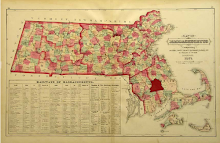
Middleborough and Lakeville are situated at the heart of southeastern Massachusetts as shown on H. F. Walling's 1871 map of the Commonwealth
Contact Me
Discover Middleborough Magazine
Recollecting Nemasket was honored to be able to contribute to the inaugural edition of Middleborough's new digital magazine which features hsitoric Titicut.
The Famous Trotting Ground: A History of Middleborough's Fall Brook Driving Park
Nemasket River Herring: A History
Representatives of the Great Cause
Star Mill: History & Architecture
South Middleborough: A History
New Pictorial History of Middleborough
Available from local and on-line booksellers.
Lakeville's King Philip Tavern
Lakeville's Native "Princesses"
Wootonekanuske and Teweeleema, more familiarly known as Charlotte and Melinda Mitchell, were the last descendants of Massasoit and lived at Betty's Neck in Lakeville.
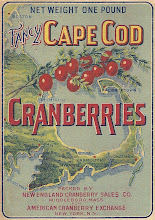
Formed in 1907 as the first cranberry growers' cooperative in Massachusetts, the New England Cranberry Sales Company was headquartered at Everett Square in Middleborough. In 1954, it merged with Ocean Spray.
Ebenezer W. Peirce, "History of Middleboro'" in D. Hamilton Hurd. History of Plymouth County, Massachusetts, with Biographical Sketches of Many of Its Pioneers and Prominent Men. Philadelphia, PA: J. W. Lewis & Co., 1884.
Ebenezer W. Peirce, "History of Lakeville" in D. Hamilton Hurd. History of Plymouth County, Massachusetts, with Biographical Sketches of Many of Its Pioneers and Prominent Men. Philadelphia, PA: J. W. Lewis & Co., 1884.
Gladys Vigers. History of the Town of Lakeville, Massachusetts. Lakeville, MA: Town of Lakeville, 1952.
Phyllis Elliott Draghetti and D. Evelyn Sylvia Norris. History of the Town of Lakeville: The Next Twenty-Five years 1953-1978. Lakeville, MA: Town of Lakeville, 1978.
The Lakeville Historical Tour Committee Presents Dartmouth Path - The Old Stage Road. Lakeville, MA: Preserve Our Lakeville Landmarks, 2001.
The Lakeville Historical Tour Committee Presents Old Main Street and Crooked Lane & A Self-Guided Tour of Main Street. Lakeville, MA: Preserve Our Lakeville Landmarks, 2003.
Michael J. Maddigan. Lakeville's King Philip Tavern: An Illustrated History. Lakeville, MA: Preserve Our Lakeville Landmarks, 2010.
Beechwoods
The Lakeville Historical Tour Committee Presents Historic Pierce Avenue. Lakeville, MA: Preserve Our Lakeville Landmarks, 2001.
Kenneth C. Leonard, Jr. The Beechwoods Confederacy 1709-1809: The Colonial History of Beechwoods Middleboro-Taunton Precinct, Massachusetts. Bowie, MD: Heritage Books, 2003.
William Hubbard. The History of the Indian Wars in New England from the First Settlement to the Termination of the War with King Philip, in 1677. Roxbury, MA: Samuel G. Drake, 1865. Volume 1. Volume 2.
Joseph D. Thomas, ed. Cranberry Harvest: A History of Cranberry Growing in Massachusetts. New Bedford, MA: Spinner Publications, Inc., 1990.
Edward and Yolanda Lodi, Cranberry Memories: Voices from the Bogs. Middleborough, MA: Rock Village Publishing, 2009.
Stephen Cole and Lindy Gifford. The Cranberry: Hard Work and Holiday Sauce. Gardiner, ME: Tilbury House Publishers, 2009.
Lydia Rotch. The Lakeville Historical Tour Committee Presents the History of Hill Top Farm in the Words of Lydia Rotch. Lakeville, MA: Preserve Our Lakeville Landmarks, 2009.
Mertie E. Witbeck. History of the Central Congregational Church, Middleborough, Massachusetts 1847-1947. Middleborough, MA: Central Congregational Society, 1947.
CEMETERY HISTORIES & INSCRIPTIONS
Peter Benes. The Masks of Orthodoxy: Folk Gravestone Carving in Plymouth, Massachusetts, 1689-1805. Amherst, MA: University of Massachusetts Press, 1977.


.jpg)


.jpg)






+of+Smoky+Mountains+018.jpg)

